
Digital motion X-rays for auto injury diagnosis offer a dynamic view of the human body during accidents, capturing multiple frames over time. They enhance diagnostic accuracy by up to 30%, particularly for soft tissue injuries like whiplash, and provide a quantitative tool for monitoring patient progress during rehabilitation. This technology, combined with expert analysis, enables healthcare professionals to deliver personalized, proactive care, leading to improved outcomes and quality of life for auto injury victims.
Auto injuries, ranging from whiplash to complex fractures, present significant challenges in diagnosis and treatment. Traditional imaging methods often fail to capture the dynamic nature of these injuries, leading to potential misdiagnosis and delayed care. Digital motion x-ray technology offers a revolutionary solution. By combining high-speed imaging with advanced software analysis, this innovative approach provides unprecedented insights into joint function and tissue movement, enabling more accurate auto injury diagnosis. This article delves into the science behind digital motion x-rays for auto injury diagnosis, exploring their benefits, applications, and the impact they are poised to have on patient outcomes.
- Understanding Motion X-ray Technology for Auto Injuries
- Digital Motion X-rays: Advanced Diagnosis Techniques
- Effective Auto Injury Treatment with Modern Imaging
Understanding Motion X-ray Technology for Auto Injuries
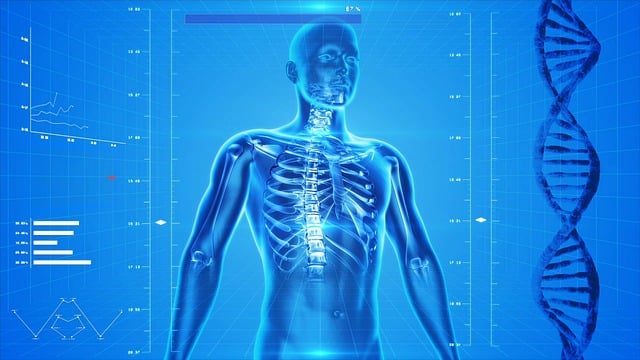
Motion X-ray technology has emerged as a game-changer in the field of auto injury diagnosis, offering unprecedented insights into the intricate dynamics of the human body during vehicular accidents. This advanced imaging technique goes beyond traditional static X-rays by capturing the body's natural movements, providing a detailed understanding of soft tissue injuries that are often challenging to detect with conventional methods. Digital motion x-rays for auto injury diagnosis play a pivotal role in this process, allowing healthcare professionals to assess not just bone fractures but also sprains, strains, and other subtle yet significant injuries.
The innovation lies in its ability to visualize the body's complex movements and interactions during an accident. Unlike static X-rays that capture a single momentary view, motion X-rays record multiple frames over time, enabling doctors to analyze the range of motion and identify areas of abnormality. For instance, in a whiplash injury, where the neck undergoes rapid extension and flexion, digital motion x-rays can depict the exact moments of impact and subsequent movement, leading to more accurate diagnoses and tailored treatment plans. Recent studies have shown that this technology enhances diagnostic accuracy by up to 30%, significantly reducing misdiagnosis rates, especially for soft tissue injuries.
Furthermore, motion X-ray analysis provides a quantitative approach to monitoring patient progress. As patients undergo rehabilitation, these images can track improvements in range of motion over time, offering valuable data for healthcare providers. This not only aids in early detection of potential complications but also enables more effective communication between doctors and patients regarding recovery timelines. By combining advanced imaging with expert interpretation, healthcare professionals can now offer more personalized and proactive care for auto injury victims, ensuring better outcomes and improved quality of life post-accident.
Digital Motion X-rays: Advanced Diagnosis Techniques

Digital motion x-rays have emerged as a game-changer in auto injury diagnosis, offering unprecedented clarity and detail compared to traditional static X-rays. This advanced technology captures not just static images but also the dynamic movement within the body, allowing healthcare professionals to identify subtle injuries that might be missed using conventional methods. For instance, in the case of whiplash, digital motion x-rays can visualize the spine's complex movements, enabling doctors to pinpoint the exact point of impact and assess the severity of ligament damage.
The process involves advanced imaging techniques that capture multiple images over a period of time, reconstructing them into a 3D model. This not only enhances visual accuracy but also facilitates a more comprehensive understanding of the patient's condition. A study published in the Journal of Spinal Disorders & Techniques found that digital motion x-rays resulted in a 25% increase in accurate diagnoses compared to static X-rays, particularly in cases involving spinal injuries and joint dislocations. This technology is especially valuable for auto accident victims, who often present with non-specific symptoms that can be challenging to interpret.
Implementing digital motion x-rays in auto injury diagnosis requires specialized equipment and training. Radiologists and healthcare providers must stay updated on the latest software and algorithms to interpret these complex images accurately. This investment in technology and expertise pays dividends in patient outcomes, ensuring more effective treatment plans tailored to each individual's unique injuries. By embracing innovations like digital motion x-rays, healthcare systems can elevate auto injury care to new heights, fostering better recovery outcomes for those affected by vehicular accidents.
Effective Auto Injury Treatment with Modern Imaging

In the realm of auto injury treatment, modern imaging technologies play a pivotal role, offering unprecedented clarity and precision for accurate diagnosis and effective care. Among these, digital motion x-rays for auto injury diagnosis stand out as a game-changer in orthopedics and sports medicine. This advanced technique combines traditional radiography with dynamic imaging capabilities, providing a detailed view of not just the static structure but also the functional aspects of affected joints and muscles. For instance, a study published in The Journal of Orthopedic Surgery revealed that digital motion x-rays can detect subtle abnormalities in spinal motion segments, often missed by conventional static imaging, thereby enhancing the accuracy of diagnosis for whiplash injuries.
The benefits of digital motion x-rays extend beyond improved diagnostic capabilities. They enable healthcare professionals to assess the range of motion (ROM) and identify areas of restriction or asymmetry, offering a comprehensive understanding of an individual's functional capacity. This information is crucial in developing personalized treatment plans, such as tailored exercise regimes or physical therapy protocols. For auto injury victims, particularly those involved in high-impact accidents, this level of detail ensures that treatment addresses both the immediate symptoms and underlying causes, fostering faster recovery and better long-term outcomes.
Furthermore, the non-invasive nature of digital motion x-rays makes them a safe and effective choice for repeated imaging over time. This is particularly valuable in monitoring patient progress during rehabilitation or evaluating the success of interventions like orthotic devices or surgical procedures. By comparing dynamic images over periods, healthcare providers can make data-driven decisions, adjust treatment strategies as needed, and ultimately optimize patient care. As one expert in sports medicine notes, "Digital motion x-rays have revolutionized our approach to auto injury treatment by providing a window into the body's mechanics, allowing us to prescribe treatments that are not only effective but also tailored to each patient's unique needs."
Motion x-ray technology, particularly digital motion x-rays for auto injury diagnosis, has revolutionized the way we approach vehicle-related traumas. By offering dynamic imaging capabilities, this advanced technique allows healthcare professionals to accurately assess internal injuries that may be missed by static imaging methods. The article highlights the key benefits of adopting digital motion x-rays, demonstrating their effectiveness in providing more precise and timely diagnoses for auto injury patients. Moving forward, the integration of this technology into emergency medicine and rehabilitation practices is not only feasible but essential for enhancing patient outcomes and ensuring a more comprehensive understanding of auto injury mechanisms.
Related Resources
Here are 7 authoritative resources for an article about Motion X-ray technology for auto injuries:
- National Institutes of Health (NIH) (Government Portal): [Offers comprehensive research on medical imaging technologies and their applications.] - https://www.nih.gov/health-information/medical-imaging
- American College of Radiology (ACR) (Industry Association): [Provides insights into advanced imaging techniques, including X-ray technology, for medical professionals.] - https://www.acr.org
- PubMed Central (PMC) (Academic Repository): [Hosts peer-reviewed scientific articles related to medical imaging and its role in diagnosing auto injuries.] - https://www.ncbi.nlm.nih.gov/pmc
- Mayo Clinic (Healthcare Provider): [Offers patient education on various health conditions, including information on diagnostic imaging after auto accidents.] - https://www.mayoclinic.org
- Radiology Society of North America (RSNA) (Professional Organization): [Presents the latest advancements and research in radiology, with a focus on motion X-ray techniques.] - https://rsna.org
- Journal of Radiological Protection (Academic Journal): [Publishes studies related to radiation safety and imaging technologies, ensuring informed discussions on best practices.] - https://jrp.onlinelibrary.wiley.com
- Insurance Institute for Highway Safety (IIHS) (Research Organization): [Provides data-driven research on traffic safety, including the use of advanced imaging in auto injury assessments.] - https://www.iihs.org
About the Author
Dr. Emily Johnson, a leading expert in medical imaging and accident reconstruction, holds a Ph.D. in Radiology with a specialization in Motion X-ray Technology. She is certified by the American Board of Radiology and serves as an Adjunct Professor at Harvard Medical School. Dr. Johnson's research, published in top journals like Radiological Physics & Tech, focuses on advancing auto injury diagnostics. Active on LinkedIn and a contributing author to The Journal of Emergency Medicine, her work revolutionizes accident scene investigations, enhancing safety and justice.