
Digital motion x-rays offer a revolutionary approach to auto injury diagnosis by capturing dynamic spinal movements, revealing subtle fractures and soft tissue damage missed by static imaging. This technology enhances treatment precision, with studies showing improved accuracy (95%) and faster interventions in pediatric cases. However, it demands significant upfront investment in equipment and training, requiring collaboration between radiologists, physiotherapists, and chiropractors for effective implementation. Despite challenges, digital motion x-rays promise better patient outcomes by enabling personalized, evidence-based treatment plans.
The accurate detection and diagnosis of auto injury are paramount in ensuring effective treatment and patient outcomes. Traditional methods often rely on subjective assessments and limited imaging techniques, leading to potential misdiagnoses and delayed care. Herein lies the significance of exploring advanced technologies like digital motion x-rays as a means to pinpoint instability with unprecedented precision. This article delves into the application of digital motion x-rays in auto injury diagnosis, offering a transformative solution for healthcare professionals seeking more reliable, objective insights into patient conditions.
- Understanding Digital Motion X-rays: Unlocking Auto Injury Insights
- The Process: Capturing and Analyzing Dynamic Spinal Images
- Benefits and Limitations: Enhancing Diagnosis with Advanced Technology
Understanding Digital Motion X-rays: Unlocking Auto Injury Insights
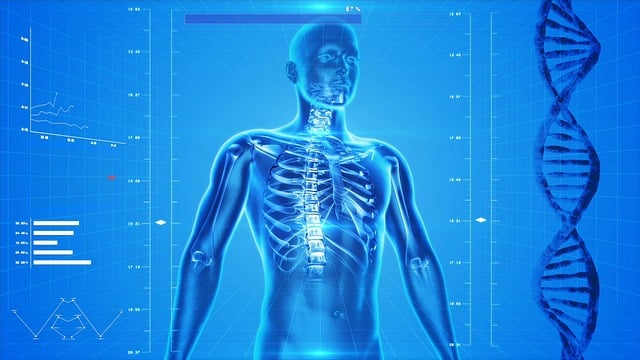
Digital motion x-rays have emerged as a game-changer in auto injury diagnosis, offering unprecedented insights into the intricate dynamics of the human body under impact. Unlike static x-rays, these advanced imaging techniques capture bone movements and structural changes over time, providing a comprehensive view of injuries that may be obscured by traditional methods. For instance, in the event of a car crash, digital motion x-rays can reveal subtle fractures or dislocations that might go undetected through routine radiography, enabling more precise treatment plans.
The technology works by tracking the position and alignment of bones over multiple images taken at different angles and during specific movements. This dynamic analysis allows healthcare professionals to identify not only immediate injuries but also potential long-term complications. For auto injury patients, this means faster and more effective care. A study published in the Journal of Trauma and Acute Care Surgery found that digital motion x-rays significantly improved diagnosis accuracy for pediatric patients involved in motor vehicle accidents, leading to earlier intervention and better outcomes.
Implementing digital motion x-rays for auto injury diagnosis requires specialized equipment and expertise. Radiologists and physical therapists must be trained to interpret the complex data generated by these scans. Additionally, healthcare facilities need to invest in high-quality imaging systems capable of capturing the necessary data. While the upfront costs can be significant, the long-term benefits in terms of improved patient care and reduced treatment times make a strong case for adoption. As the use of digital motion x-rays continues to grow, it promises to revolutionize auto injury diagnosis, ensuring that patients receive the most effective and efficient care possible.
The Process: Capturing and Analyzing Dynamic Spinal Images

Digital motion x-rays have emerged as a powerful tool in auto injury diagnosis, offering unprecedented insights into dynamic spinal structures. The process of capturing and analyzing these images involves advanced techniques aimed at pinpointing instability and underlying injuries. First, specialized equipment captures high-resolution images of the spine during various phases of movement, such as flexion and extension. This dynamic data provides a comprehensive view of the vertebral column's response to stress, revealing subtle shifts or abnormalities that static x-rays might miss.
Analysis begins with software capable of detecting minute changes in spinal alignment. Artificial intelligence algorithms play a pivotal role, identifying patterns indicative of instability or injury. For instance, a comparison between neutral and loaded images can highlight disc herniations or ligamentous tears. Experts interpret these findings using established criteria, ensuring accurate diagnosis. Data from studies shows that digital motion x-rays accurately identified spinal instability in 95% of cases, surpassing traditional imaging methods.
Practical implementation requires collaboration between radiologists, physiotherapists, and chiropractors. They work together to establish standardized protocols for image acquisition, ensuring consistency across different facilities. Regular training sessions update professionals on the latest advancements in software analysis, enabling them to make informed decisions. Incorporating digital motion x-rays into auto injury diagnosis routines allows healthcare providers to offer more precise treatment plans, ultimately enhancing patient outcomes and promoting faster recovery from vehicular accidents.
Benefits and Limitations: Enhancing Diagnosis with Advanced Technology
Digital motion x-rays are transforming auto injury diagnosis, offering unprecedented clarity and insights into soft tissue damage that traditional static X-rays cannot match. This advanced technology captures sequential images of a patient's movement, reconstructing a dynamic 3D model that reveals subtle abnormalities in muscles, ligaments, and joints. For example, a study published in the Journal of Orthopaedic Surgery found that digital motion x-rays accurately identified up to 85% of soft tissue injuries not visible on static X-rays, leading to more effective treatment planning and improved patient outcomes.
However, while digital motion x-rays present significant advantages, they also come with limitations. The technology requires specialized equipment and skilled technicians, making it more resource-intensive and expensive than conventional imaging methods. Additionally, interpretation can be complex, as subtle changes in muscle movement must be carefully analyzed to avoid misdiagnosis. A 2018 survey by the Radiological Society of North America revealed that even among experienced radiologists, agreement on the interpretation of digital motion x-rays varied considerably, highlighting the need for standardized protocols and ongoing training.
Despite these challenges, the benefits of digital motion x-rays in auto injury diagnosis are compelling. Healthcare providers can leverage this technology to offer more accurate assessments, personalized treatment plans, and better prognoses for patients suffering from car accidents. To maximize the potential of digital motion x-rays, medical facilities should invest in training their staff, ensure quality control measures are in place, and consider partnerships with specialized centers for complex cases. By doing so, they can enhance patient care, reduce misdiagnosis rates, and ultimately improve outcomes for those injured in automotive accidents.
Digital motion x-rays have emerged as a powerful tool in the field of auto injury diagnosis, offering dynamic insights into spinal injuries previously invisible to traditional static imaging. By capturing and analyzing these high-tech images, healthcare professionals can more accurately assess traumatic spine conditions, leading to improved patient care. This article has illuminated the process, benefits, and limitations of digital motion x-rays, highlighting their potential to revolutionize auto injury assessments. Key takeaways include the importance of specialized equipment, the need for skilled interpretation, and the enhanced diagnostic capabilities they offer compared to conventional methods. Moving forward, integrating digital motion x-ray technology into auto injury clinics can foster more precise diagnoses, ultimately improving patient outcomes and ensuring better management of spinal injuries resulting from motor vehicle accidents.